
 Book Now

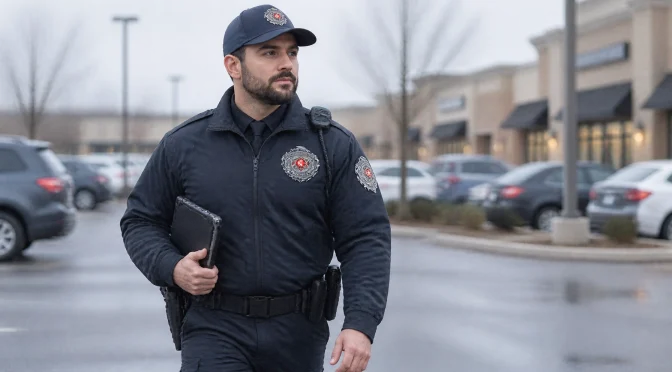
For many property managers, the parking complaint log is not evidence of a parking crisis. It is often five or six repeat offenders taking visitor, customer or reserved spaces. A clear and consistent program can address the pattern, but putting a guard on site is not the first step.
Parking enforcement often fails because the rules, signs and authorization are not ready. Before you begin parking enforcement services, walk the property, confirm what can be enforced and decide how each issue will be handled.
Start With Your Signs, Not Your Guards
Enforcement starts with posted rules. Walk the property as a driver would: enter from each driveway and look for signs from the vehicle’s approach. Confirm that each sign is easy to see, readable and correctly worded. Check that it describes the rule you intend to enforce, such as customer-only parking, visitor parking, permit requirements or time limits.
A rule that is not clearly posted is difficult to apply fairly. In Mississauga, the City requires private property to have proper signs outlining parking regulations before City staff can enforce those rules. Make sure signs are positioned at relevant entrances and parking areas, and that trees, parked vehicles, poor lighting or weather have not made them hard to read.

Create a simple site map showing sign locations, accessible spaces, fire routes, loading areas and reserved stalls. This gives your team a shared reference and helps identify gaps before any notices are issued.
Get The Paperwork Right Before Anyone Writes A Notice
For City enforcement on private property in Mississauga, the owner must submit a Private Parking Offence Letter of Authorization and supporting documents. The owner provides proof of ownership, such as a deed or property tax bill. If a property manager or other authorized person is applying on the owner’s behalf, include a signed and dated letter from the owner granting that authority, with the owner’s contact information.
Submit the form and documents as directed by the City of Mississauga, then call 311 to request a property inspection. City staff inspect the site and review the signs. Enforcement should not begin until that review is complete and the City confirms the signs are suitable.
Once the required process is in place, private security officers can request handwritten penalty notice booklets through the City’s parking enforcement reservation system. This is separate from a contractor’s own private notice process. Confirm which process applies to your property and the type of enforcement you intend to use before service begins.
Know Where Your Authority Actually Comes From
A security guard is not a municipal parking officer simply because they wear a uniform or patrol a lot. On private property, guards act as authorized agents of the property owner. Their authority to address trespass is grounded in Ontario’s Trespass to Property Act, alongside the owner’s direction and the posted conditions of the property.
Security guards and security businesses are licensed under Ontario’s Private Security and Investigative Services Act, 2005. That licensing is not the same as municipal authority to issue a City penalty. A private notice is not a municipal ticket, and guards should not present it as one. Where the City’s process and authorized booklets apply, use them according to the City’s requirements.
Towing is a separate and more serious step. It must be authorized and handled in accordance with applicable Ontario towing rules and the property’s procedures. Do not treat a tow as an automatic consequence of every parking violation.
Protect The Spaces That Carry Real Penalties
Accessible parking spaces and fire routes should be at the top of the enforcement plan. Mississauga’s City-set penalties for misuse of an accessible space without a valid permit are about $450, while parking in a designated fire route is about $225. These are municipal penalty amounts; they are not automatically the amount or status of a private notice.
A vehicle blocking a fire route can also delay emergency response and put building occupants at risk. These two situations should never wait for a scheduled patrol. Set a clear procedure for immediate notification and response, including who the guard contacts and how the incident is recorded.
Build An Escalation Ladder And Stick To It
A consistent response helps residents, tenants, customers and visitors understand what happens next. It also gives guards a reliable process to follow and reduces arguments at the curb.
- Courtesy notice: Explain the posted rule and ask the driver to move or comply.
- Written warning: Record the plate, location, time and relevant rule in the site log.
- Penalty notice: Issue only through the process authorized for the property and offence.
- Towing: Reserve for repeat or blocking offenders, and only when properly authorized.
Apply the same steps consistently, except where an urgent safety concern requires immediate action. Consistency makes the program more defensible and helps prevent disputes from becoming personal. Keep current registers for tenants, visitors, contractors and approved service vehicles so permit holders are not caught in the net. Update those lists when residents move, contractors change or temporary permissions expire.
When a driver challenges a notice, the officer should remain calm, explain the posted rule and record the interaction. A professional, courteous response matters as much as a firm one.

Cover The Hours And The Corners Nobody Watches
Parking problems often happen outside office hours. Condo visitor spaces may fill overnight, retail plazas may be busiest at peak shopping times, and event overflow can block access roads or loading areas. Snow-clearing routes and abandoned vehicles sitting for weeks also need clear procedures.
Plan coverage around the property’s actual patterns, not only the hours when complaints are easiest to receive. Randomised mobile patrol sweeps can cover multiple areas and reduce predictable gaps. Camera coverage at entrances and accessible spaces can help document activity and reveal recurring issues. Our video monitoring can add a live surveillance layer where the site requires it.
Canadian Security Services combines trained officers, video surveillance and digital reporting in a hybrid security model. Officers are licensed, qualified and insured, with site-specific orientation and training in conflict management and incident reporting. Coverage can be tailored for overnight shifts, weekends or busier periods, with 24/7/365 support available.
What You Should Get Back Every Month
A monthly report should make it easier to see whether the rules and patrol plan are working. Ask for:
- Digital logs organized by plate, date, time and location
- Photos with timestamps to document incidents and conditions
- Incident reports for disputes, safety concerns and enforcement actions
- A summary of repeat offenders and the property’s problem zones
- A record of patrol activity and any follow-up required
This information gives property managers and boards something concrete to review. It can support a decision to adjust a parking rule, improve a sign, update a permit register or add patrol coverage to a problem area. For a condo community, it may also help the board distinguish a recurring pattern from isolated incidents. For commercial sites, it can show whether customer parking is being protected at peak hours.

Parking Enforcement Services For Mississauga And The GTA
A reliable program begins with a site walk-through, correct signs, completed authorization and a clear escalation policy. Canadian Security Services provides parking enforcement services for condo communities, retail plazas, commercial landlords and industrial facilities across Mississauga and the GTA. Our parking enforcement services can be arranged for short-term or long-term needs and coordinated with commercial security or condominium security where appropriate.
Eligible clients may be able to switch and save up to 20% on current security costs. Call 1 866 925 9889 or 647 409 3789 to discuss your property and arrange a walk-through. You can also contact our team to get started.
Frequently Asked Questions
Can A Security Guard Write A Real Ticket?
A private security guard does not issue a municipal ticket just by being a guard. In Mississauga, officers can request City penalty notice booklets through the City’s reservation process, where applicable. A private notice is not the same as a municipal penalty.
Do We Need New Signs?
Not always. Your signs must be clear, correctly worded and visible where drivers enter and park. The City reviews signs during its inspection before City enforcement begins.
How Fast Can Enforcement Start?
Timing depends on completing the authorization process, arranging the inspection and addressing any sign issues. Canadian Security Services can help plan coverage once your requirements and site readiness are clear.
What About A Tenant Who Keeps Doing It?
Use the same documented escalation steps each time and check the tenant’s parking status before action. Keep the property manager or board informed so repeat cases are handled consistently.
Can You Handle An Event Weekend?
Yes. Patrols and enforcement coverage can be tailored for event periods, including short-term or weekend needs. Share the site layout, event schedule and parking rules so the plan can be set in advance.

