
 Book Now

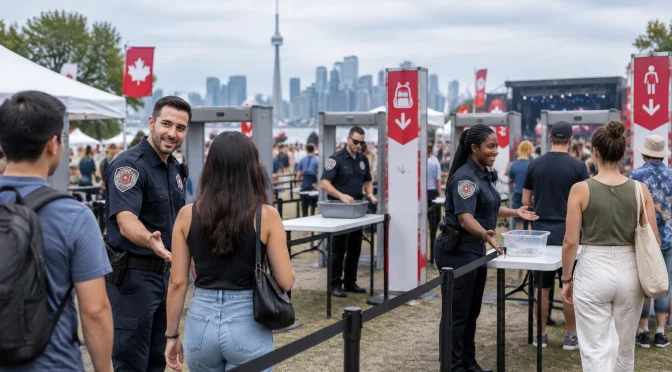
Crowd problems are often planning problems. A queue with nowhere to go, a crowded bar area, or a blocked exit can put guests at risk before a security guard has a chance to intervene.
Use this run-sheet walk-through to plan safer crowd movement from eight weeks out to load-out. It gives your team practical checkpoints for coordinating event security services at festivals, corporate events, venues, and community gatherings in Toronto, Mississauga, Brampton, Vaughan, Scarborough, Oakville, and Hamilton.
Eight Weeks Out: Plan For Each Zone, Not One Site-Wide Number
Start with a current site plan. Mark the main stage, seating, food and alcohol areas, washrooms, entry gates, emergency access, exits, parking, and back-of-house zones. Then set an operating capacity for each area.
A single attendance limit for the whole property may hide local crowding. A stage-front viewing area, bar queue, tent, or narrow walkway can become uncomfortable while the rest of the site still feels open. Make each zone’s limit clear to your operations team and identify who can pause entry when it approaches capacity.
For indoor events, the venue’s posted occupant load is a legal limit, not a target to exceed. Ontario’s Fire Code bases assembly occupancy on the intended use and floor area, and limits the load to what the available exits can accommodate. Confirm the posted load and any event-specific restrictions with your facility.
Crowd density is also a practical warning sign. As a rough guide, around two people per square metre is comfortable standing room; beyond that, guests start stepping on each other and tempers shorten long before there is a crush. Don’t wait for guests to struggle to move before you slow entry or adjust the layout.
If your event uses a Toronto City permit location, an Emergency Action Plan (EAP) is required for many permitted events and is reviewed by City staff and emergency services. Toronto’s planning guidance identifies a minimum submission timeline for an EAP, with more time potentially needed for complex events. Confirm your event’s deadline and requirements with the City early. Review the City of Toronto’s event planning guidance and emergency planning requirements and the Ontario Fire Code occupant-load and egress rules.
For large public crowds, road closures, or events serving alcohol, contact Toronto Police Service to discuss public safety and whether paid-duty officers may be needed.
Four To Six Weeks Out: Design Entry Gates To Keep Lines Moving
A screening point is a processing area, not just a table at the front gate. Estimate when guests will arrive, what checks are required, and how quickly each lane can handle them. Then provide enough space for lines to form without spilling into sidewalks, traffic, emergency routes, or other queues.
Plan the gate layout around the guest journey:
- Separate ticket scanning from bag checks or other screening where the layout allows.
- Create distinct lanes for general admission, accessible entry, staff, vendors, and credential exceptions.
- Make signs visible before guests reach the front of the line.
- Keep a clear route for people who need help, have a ticket issue, or need to step aside.
- Assign a supervisor who can pause arrivals or open another lane if the queue builds.
Use a consistent process for tickets, wristbands, and staff credentials. Your access control security team can help manage ticket checks, wristbands, and authorized entry points.

The gate should have a guest-services mindset: welcome people, give clear directions, and explain what is needed. The job is still to apply the event’s screening and admission rules, but a calm, respectful interaction can prevent unnecessary friction. Make sure guards and volunteers know when to refer a dispute to the gate supervisor rather than debating it in front of a growing line.
Two To Three Weeks Out: Keep Exits Clear And Plan For Alcohol Queues
Walk the site as if you were a guest, and then repeat the walk as if you needed to leave quickly. Check that exits, egress routes, fire access, and emergency vehicle paths are open and easy to identify. Keep barriers, vendor equipment, signs, parked vehicles, and waiting lines out of these routes.
Assign people to monitor key exits during public hours. Their role is to keep routes clear, report problems, and guide guests if directed by the event lead. Never use an exit as a place to store equipment or form a queue. Follow the venue’s fire safety plan and the direction of the appropriate authorities.
Alcohol service needs its own plan. Set a capacity for the licensed area, keep its queue within the designated footprint, and make age checks, wristband rules, and escalation procedures clear to staff. Position queues so they don’t cross walkways or block exits. Coordinate with the bar manager and event lead on what to do when a guest appears intoxicated or a line becomes too long.
In Toronto, organizers should also check the City’s alcohol-permit requirements and contact Toronto Police Service about public safety and paid-duty officer needs where appropriate. Security staffing needs depend on the event, not on one universal ratio.
Event Day: Brief The Team Before Doors Open
Give guards, volunteers, venue staff, and vendors a shared briefing before guests arrive. Use one site map and clear radio language. Everyone should know who is in charge, where to report a concern, and who can authorize a pause in entry or a change to the plan.
Cover the parts of the run sheet that affect crowd movement:
- Zone limits and who monitors each area
- Gate lanes, ticket and credential rules, and accessible entry
- Exit routes, emergency access, and locations that must stay clear
- Alcohol service boundaries and queue arrangements
- Medical response contacts and the route for emergency responders
- How to report an incident and who communicates with guests

For wider sites, cameras can add visibility at gates, along the perimeter, and in back-of-house areas. Combine them with trained personnel and clear reporting, not as a replacement for staff on the ground. Canadian Security Services provides a hybrid model of guards, video surveillance, and digital incident reporting; learn about video monitoring for event and site visibility.
During The Event: Manage Incidents Without Drawing A Crowd
A medical incident or guest removal can quickly attract bystanders. Decide in advance who calls for medical help, who meets responders, who keeps a route open, and who manages nearby guests. Give the incident lead a radio channel or contact method that works across the site.
For a medical call, follow the event’s medical plan. Keep access clear, protect the guest’s privacy as much as possible, and avoid inviting onlookers closer. Do not let staff crowd the scene or block responders.
If a guest needs to leave, use a calm, low-profile approach. One trained team member should communicate with the guest while a supervisor coordinates support and chooses an appropriate route away from the densest crowd. Keep instructions brief and avoid public arguments. If the situation escalates or there is an immediate threat, follow the emergency plan and contact police or emergency services as appropriate. De-escalation and clear roles help keep one incident from becoming a crowd issue.
A corporate evening event may need a different staffing mix than a festival, but both benefit from clear entry rules, accessible exits, and a defined response lead.

After The Event: Secure The Clear-Out And Load-Out
The event is not secure just because the audience has left. The clear-out and load-out window can expose cash, equipment, merchandise, production cases, and AV gear while staff are tired and contractors are moving through open gates.
Set a close-out plan that names the person who controls each exit and back-of-house access point. Keep public egress routes open until the site is clear, confirm who can enter restricted areas, and use an orderly check-out process for vendors and crew. Schedule cash removal and valuable equipment movement carefully; avoid leaving items unattended or staging them in public areas.
For overnight gaps before or after a multi-day event, mobile patrol services can provide site checks. Add parking enforcement where lot control, drop-off areas, and no-stopping zones are part of your event plan. Cameras at gates, the perimeter, and back-of-house can support visibility during both operating hours and load-out.
Canadian Security Services offers flexible short-term and long-term contracts for one-night events and full weekends, with fully licensed, qualified, and insured guards trained in site-specific orientation, conflict management, and incident reporting. Event coverage can include 24/7/365 support and a mobile patrol supervisor. If you are reviewing an existing security budget, eligible clients may be able to switch and save up to 20% on current security costs.
Event Security Services For GTA Events
Your crowd plan should be specific enough for your team to use, not just a form to file. Good event security services are planned weeks before the gates open, not improvised at the fence line. Assign each zone, queue, exit, and response role before the first guest arrives. Canadian Security Services supports festivals, corporate events, and community gatherings across the GTA. For condo or residential community events, see our condominium security services.
Start planning your event security services with our special event security team. Call 1 866 925 9889 or 647 409 3789, or contact Canadian Security Services to discuss your site, schedule, and coverage needs.
Frequently Asked Questions
How Far In Advance Should I Book Event Security?
Book as soon as your date, venue, and event format are confirmed. Early planning gives you more time to coordinate staffing, permits, the EAP, and any paid-duty police requirements.
How Many Guards Do I Need For A Given Crowd Size?
There is no single guard-to-guest ratio that suits every event. Staffing depends on your layout, zone capacities, entry screening, alcohol service, hours, risk profile, and emergency plan. Request a site-specific assessment.
Do I Need Event Security If The Venue Provides Some?
Yes, you may still need event-specific coverage. Confirm what the venue team handles, then identify gaps at your gates, crowd zones, parking areas, exits, or load-out.
Can Guards Refuse Entry?
Yes. Guards can apply the event’s published admission and credential rules consistently, and refer disputes to the designated supervisor. Provide clear policies and escalation instructions before the event.
What If My Event Serves Alcohol?
Plan for age checks, a controlled licensed area, queue management, and a clear response process for intoxication or disorder. Confirm permit conditions and consult Toronto Police Service about public-safety needs.

